History
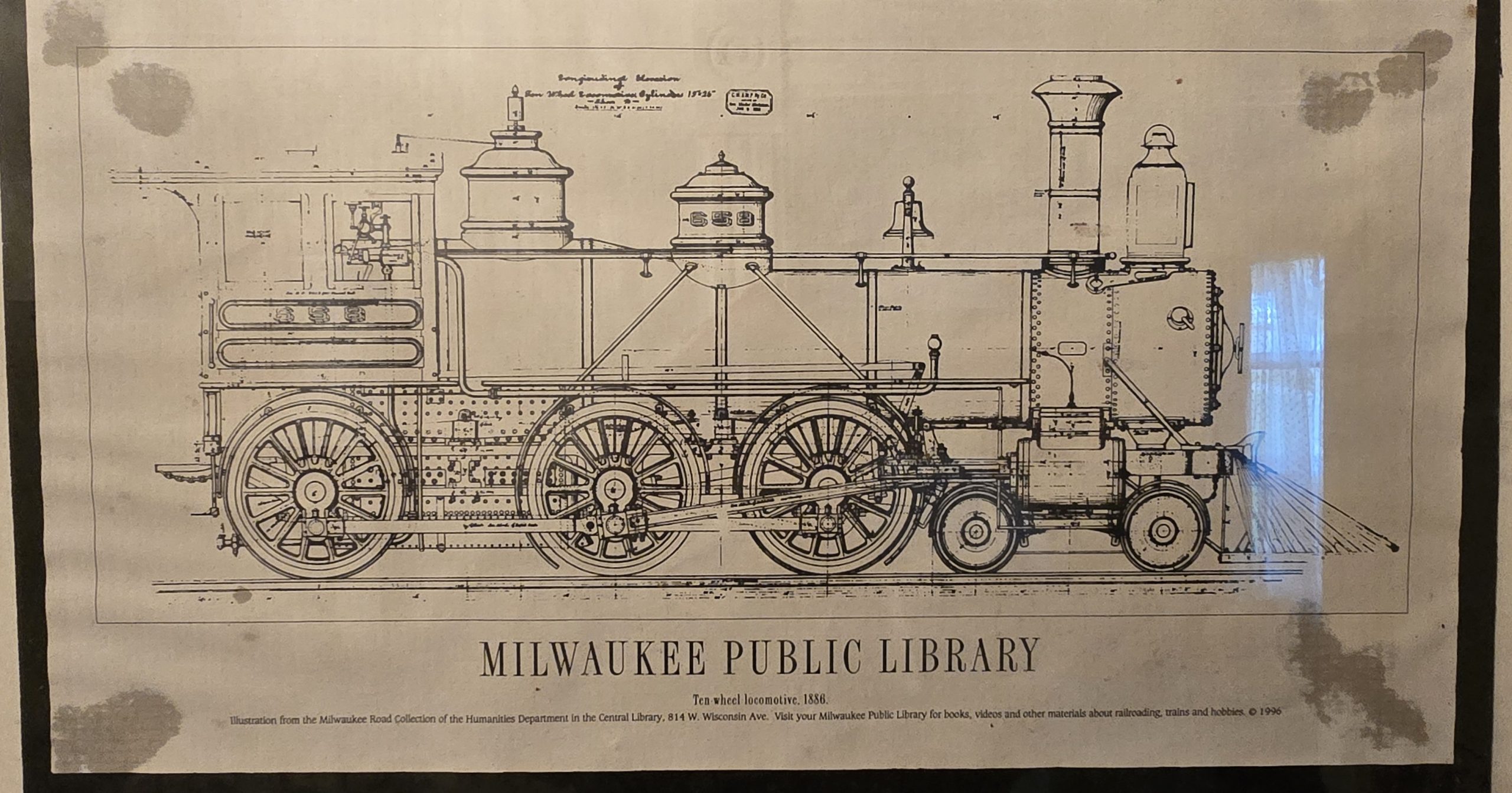
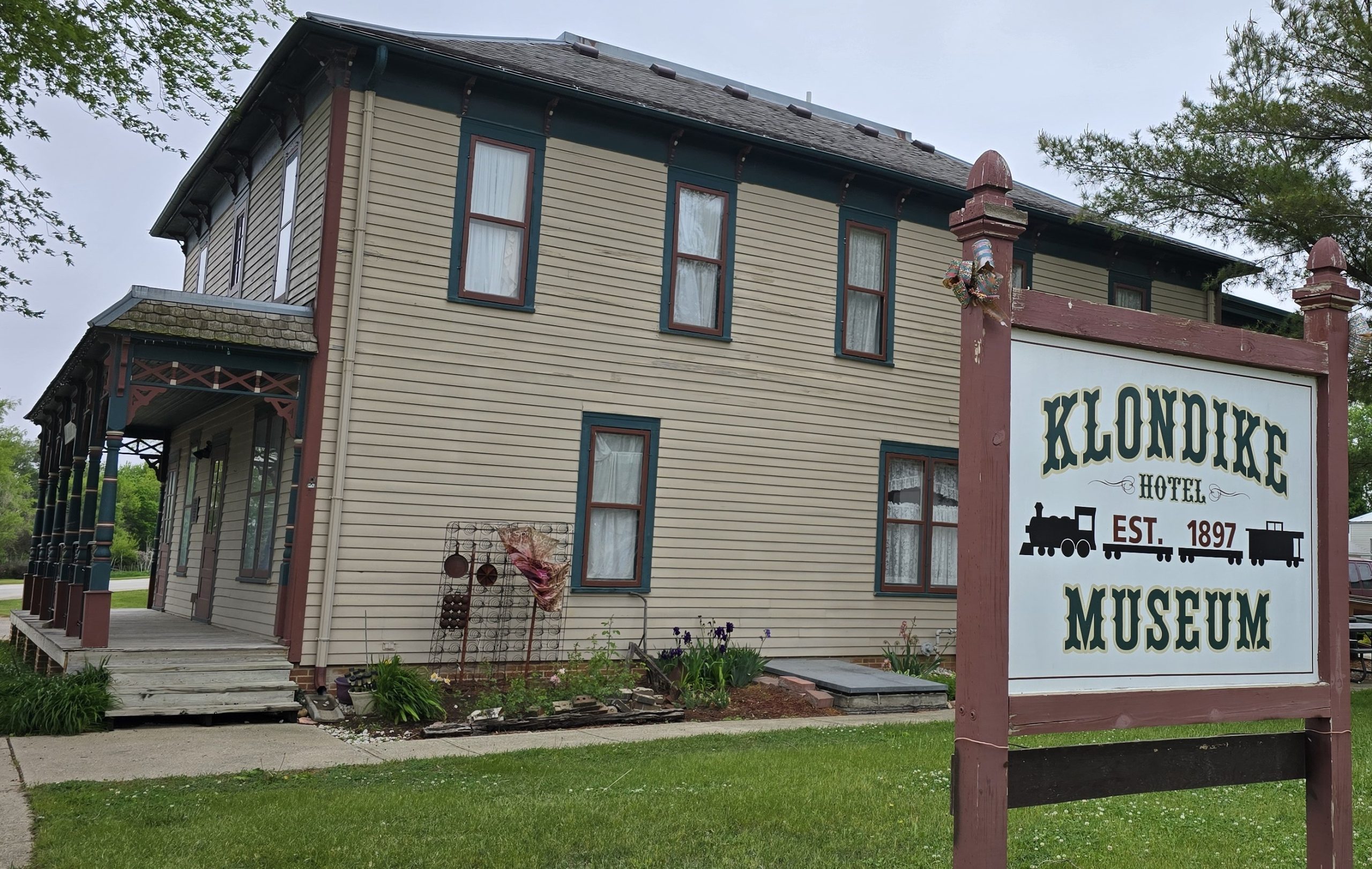
The Klondike Hotel was built in 1897 by H.J. Kopak in the small town of Manilla, Iowa. Modest by today’s standards, the Klondike resembled more of a boarding house or bed-and-breakfast, with fewer than a dozen guest rooms. Despite its size, it played an important role in the community as a popular stopover and junction point for travelers and railroad personnel associated with the Chicago, Milwaukee, St. Paul, and Pacific Railroad. The hotel’s upper floor was leased by the railroads to accommodate passenger layovers and traveling employees. In 1903, following several renovations and expansions, the Klondike was renamed the Park Hotel, marking the beginning of a new chapter in its history.
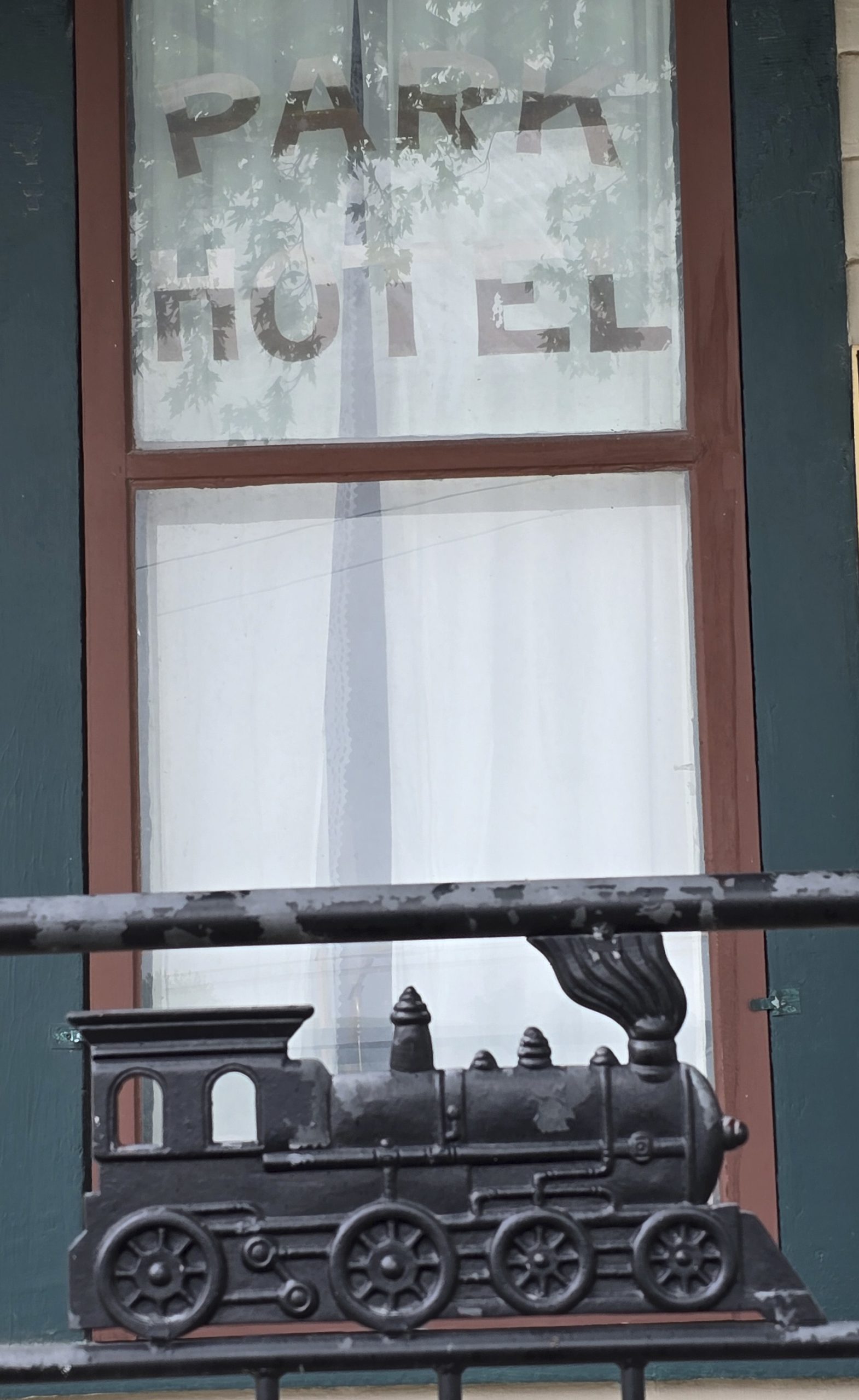
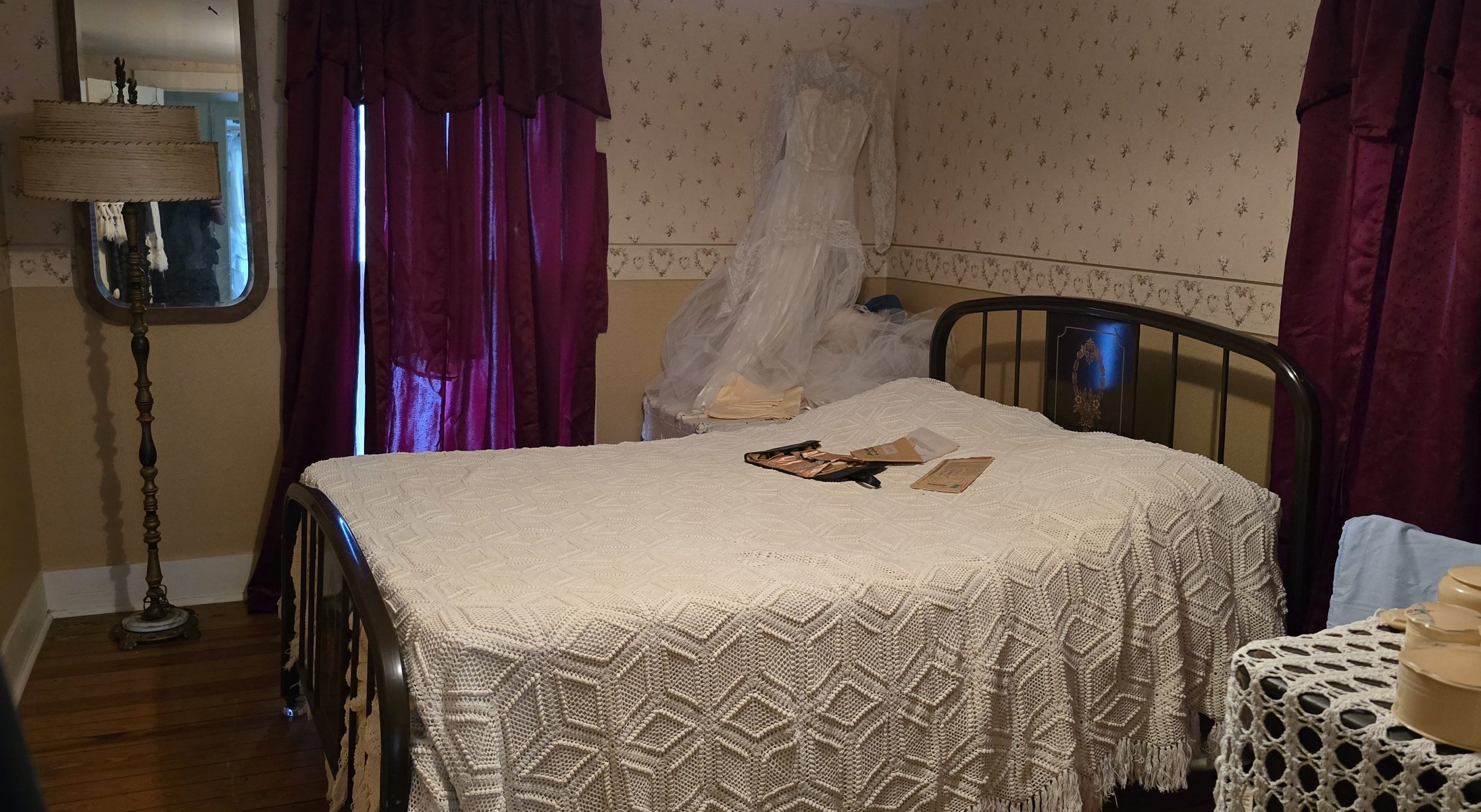
In 1996, the building was added to the National Register of Historic Places, where it was listed under its original name, the Klondike Hotel. Today, many of the hotel’s historic features remain intact, including the original transom windows above the doors, the room numbers mounted outside the guest rooms, and numerous pieces of period furniture. Meticulously maintained for decades, the building remains in excellent condition. Now serving as both a historic landmark and museum, the Klondike houses original railroad records, train logs, and passenger registers containing names dating back more than 120 years, offering a unique glimpse into the region’s rich railroad history.1,2
Claims
Visitors and guests have reported a variety of unexplained occurrences throughout the historic Klondike Hotel, including:
• Flickering lights on the Second Floor
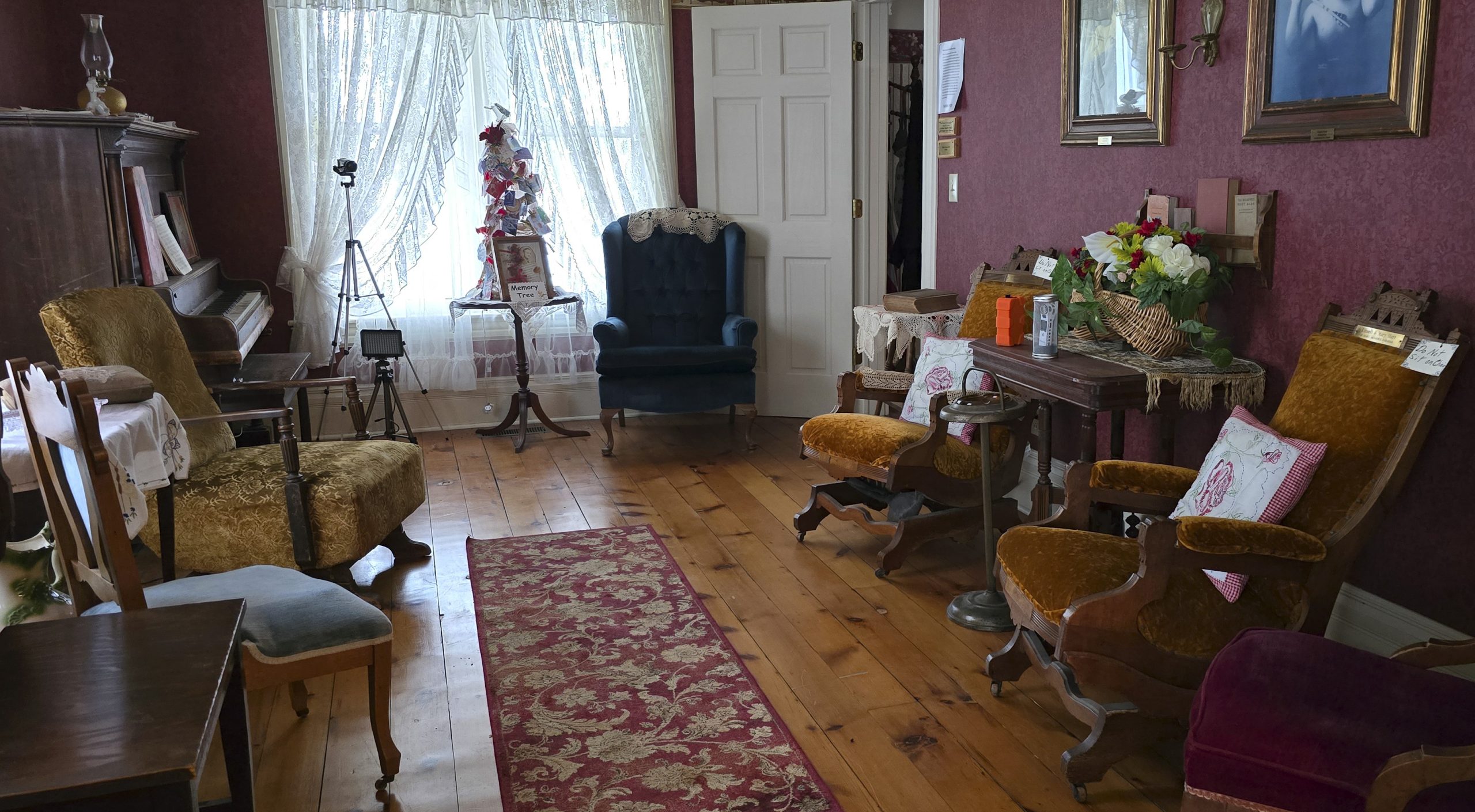
• A rocking chair near the First Floor piano moving without explanation
• Guests departing in the middle of the night after unsettling experiences
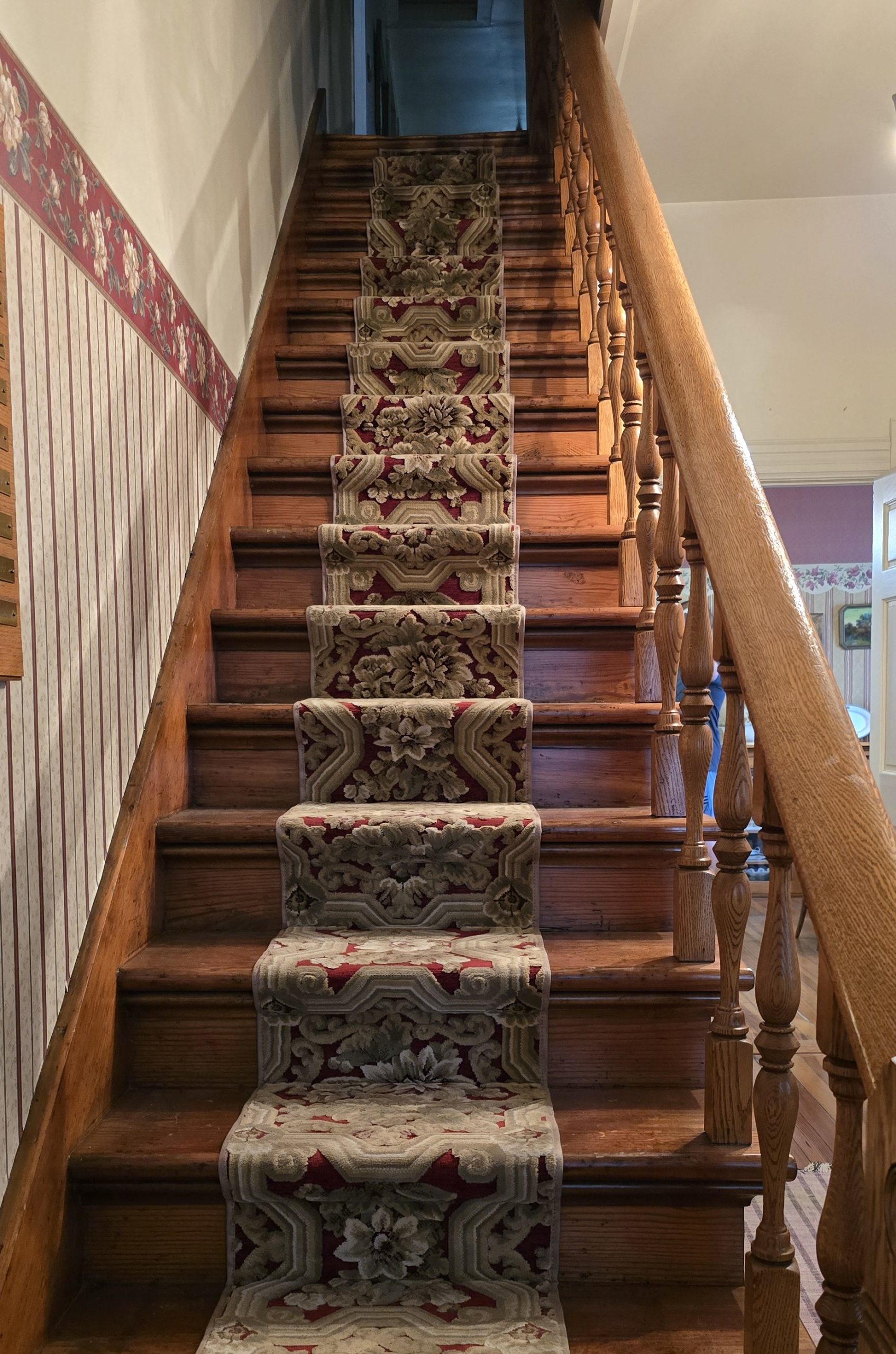
• Mysterious footsteps ascending the staircase to the Second Floor
• Multiple documented deaths associated with the property’s history
• Shadow-like figures observed in the Basement
Arrival
The investigation team arrived at 1:30 pm and was greeted by the building manager. Following a walkthrough of the entire building, the team unloaded equipment from the van and set up cameras, audio recorders, and other investigative devices.
At 3:35 pm, Tom and Marilsa collected baseline environmental data using a Kestrel 3500 Weather Station and an MEL-8704SDD electromagnetic field (EMF) single-axis detector. Measurements were taken both inside and outside the building. The interior readings are summarized in the link below.
At 3:45 pm, the team began setting up equipment for the investigation. The first device activated was the Zoom H1 digital audio recorder, which serves as a control recorder.
Control recorders are used not only as an additional recording device but also to help identify and eliminate potential sound contamination created by investigators during an investigation. To establish a reliable timeline, control recorders are activated and time-stamped before any other equipment and are the last equipment turned off at the end of an investigation. This procedure ensures that any anomalous sounds can be cross-checked with other recordings. Each control recorder is housed within a Faraday cage to minimize electromagnetic interference. Time synchronization is established using an atomic watch, allowing investigators to accurately correlate events across audio, video, and environmental monitoring devices.
A Faraday cage is a container that can block EMF frequencies. The construction of the cage will determine how many different EMF frequencies the cage will be able to block. Faraday cages work by generating an external static electrical field which causes the electric charges within the cage’s conducting material to be distributed such that they cancel the field’s effect in the cage’s interior. PIM’s cages are designed to specifically block out FM, and some AM, radio frequencies from interfering with their audio recorders, thus creating false EVPs.
Each PIM team member carries a Zoom H1 digital audio recorders, an Extech RHT50 or Extech SD700 datalogger, a GQ GMC-800 datalogging Geiger counter, and GQ GMC-390 datalogging 3-axis EMF meter throughout the investigation. The Extech datalogger records temperature, humidity, and barometric pressure at one-minute (RHT50) or five-second (SD700) intervals, enabling investigators to graph environmental changes and compare data with other equipment that may detect or record an event. In addition, each investigator wears a Boblov body camera equipped with built-in infrared illumination. These cameras operate continuously throughout the investigation and provide a visual record of each team member’s activities and observations.
Equipment Placement
- East-Side Second-Floor Hallway: Sony FDR-AX100 4K camera and EDI+ datalogger (Orange #1).
- Second-Floor Hallway Bathroom: Zoom H1N digital audio recorder. A MEL-8704SDD single-axis EMF detector, Touch Flashlight, toy horse, doll, slinky, bear, and PIM platter were also placed in the center of the hallway in a Trigger Object Bank.
- Basement (Crib Area): Sony HDR-CX150 multi-spectrum camera and Zoom H1 digital audio recorder.
- Rocking Chair Room: Sony HDR-CX160 multi-spectrum camera, Zoom H1 digital audio recorder (White), MEL-8704REM/SDD single-axis EMF detector, and EDI+ datalogger (Orange #2).
- Basement (Coaches Room): Sony HDR-CX160 multi-spectrum camera, EDI+ datalogger (Orange #1), and Zoom H1 digital audio recorder.
- West-Side Second-Floor Hallway: Sony HDR-CX160 multi-spectrum camera and EDI+ Datalogger (Green #1).
- Records Room: MEL-8704R single-axis EMF detector.
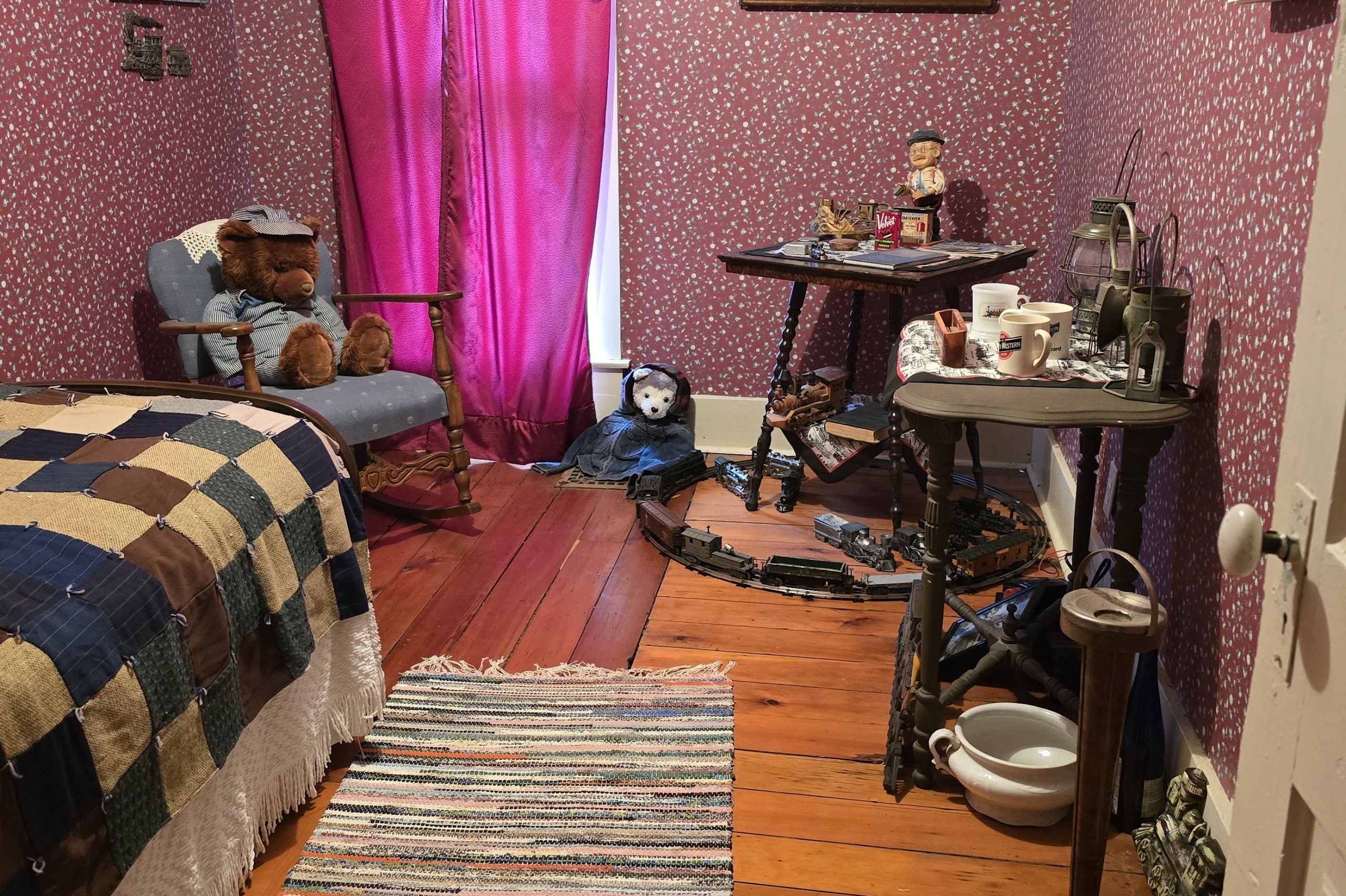
- Basement (Train Set Area): Sony HDR-CX160 multi-spectrum camera, EDI+ datalogger (Green #2), and a touch-activated flashlight. Most of the items from the team’s trigger-object collection were placed on a table in this area of the Basement.
The EDI+ datalogger is a device that datalogs temperature, EMF, and humidity, and also has a geophone built into it. This device datalogs for the entire investigation, and records the data to an SD card that can be used to generate graphs of each variable over time on a computer after the investigation. If anything in the Trigger Object bank was manipulated, the EDI+ datalogger could be used to see if any of the variables it was recording changed when the event occurred.
The PIM Platter is a plate with letters (A-Z) and numbers (0-9) around the outer rim of the plate. A metal rod on a swivel in the middle of the plate is positioned in a neutral location of the rim. The premise of the PIM Platter is to allow something to manipulate the metal rod in the direction of a letter or number in response to questions asked by investigators.
At 5:30 pm, the team completed the equipment setup and activated all devices, ensuring each was properly time-stamped.
The team then departed the building for dinner at 5:39 pm and returned at 6:37 pm to begin the investigation.
Investigation
6:56 pm – Basement Train Side, Crib Side, and Coaches Room
The team spread out across the Basement’s three primary investigation areas. Tom and Tony were stationed on the Crib Side, Noah and Marilsa covered the Train Side, and Gravy was assigned to the Coaches Room.
The investigation began with a period of control silence, a standard procedure used by PIM at each new location and within different areas of a building. This practice allows investigators to become familiar with the normal sounds and environmental conditions of the location, establishing a baseline for comparison throughout the evening. Control silence also enables the team to identify and document external noises that could later be mistaken for paranormal activity.
During this baseline period, the team noted two unexplained thumping sounds, distant voices, and the ambient hum produced by the infrared light cooling fans.
At 7:00 pm, the team began an Electronic Voice Phenomena (EVP) session.
At 7:05 pm, a sliding noise was heard on the First Floor. No explanation for the noise was located at the time.
At 7:12 pm, a stomach-like noise was heard but none of the team members identified themselves as the source. It was most likely caused by one of the team members.\
At 7:24 pm, a train passed through town and was documented as a potential source of environmental noise.
At 7:36 pm, a sound resembling a phone notification was heard, despite team members typically powering down nonessential electronic devices during investigations. Gravy had a laptop on the First Floor that was on but asleep at the time. It is possible the laptop made a noise.
No other events occurred during this session and the team decided to head to the First Floor to continue the investigation.
7:53 pm – First Floor
Tony was positioned on the south side of the Dining Room, while Noah was stationed on the north side. Gravy was located in the Rocking Chair Room, Tom was positioned at the base of the main staircase, and Marilsa was in the Records Room.
The session began with a period of control silence at 7:53 pm to establish a baseline for environmental sounds within the building.
The team began and EVP session at 7:55 pm.
At 7:59 pm, a mechanical noise was heard outside the building and noted as a potential explanation for strange noises.
At 8:10 pm, Gravy’s laptop made a noise. Gravy claimed that the laptop was asleep and should not be able to make any noise. Most likely this was not true, so Noah asked Gravy to shut down the laptop to avoid any future noises.
The team decided to end the investigation on the First Floor and move to the Second Floor after the laptop was turned off.
8:22 pm – Second Floor
The team spread out along the Second Floor Hallway near several guest rooms. Tony was stationed near Room #12, Tom near Room #8, Marilsa near Room #6, and Gravy near the top of the staircase. At the start of the session, Noah remained on the First Floor in the Bathroom area.
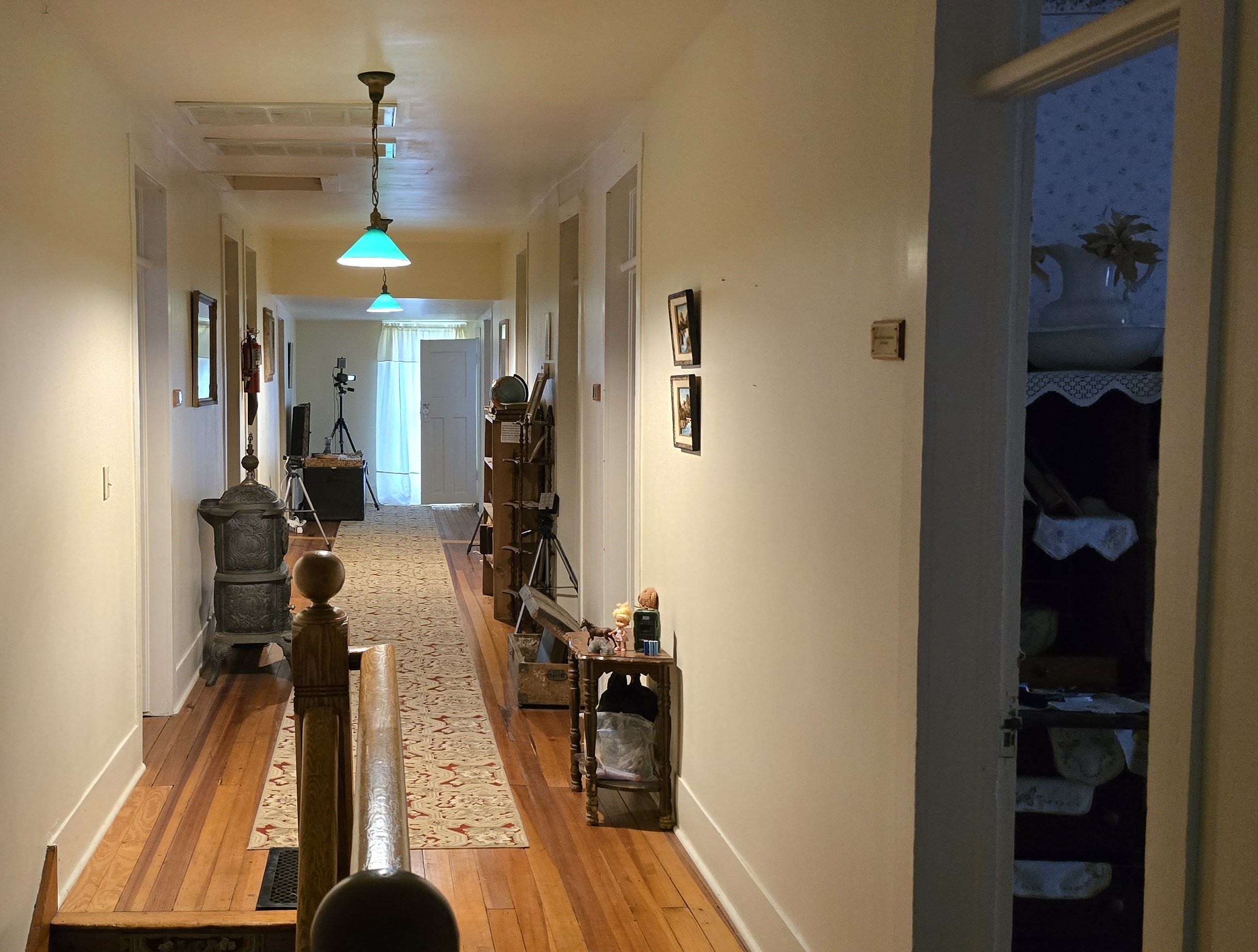
Control silence was started at 8:22 pm and the hum of a mini refrigerator was noted as a potential source of ambient noise.
After control silence, the team started an EVP session at 8:25 pm.
At 8:41 pm, after Noah flushed a toilet on the First Floor, Tony reported hearing a sound from a nearby bathtub that resembled water draining from a full tub. It is possible that strange noises reported on the Second Floor are being caused by a toilet flushing on the First Floor. Noah joined the team on the Second Floor at 8:44 pm.
At 8:46 pm, Tom and Marilsa’s Sony FDR-AX100 4K camera stopped recording after the memory card reached capacity. Noah moved to a position near Room #3.
At 8:50 pm, a loud thump was heard on the First Floor. Noah went downstairs to investigate the source. Noah searched throughout the First Floor looking for anything out of place, but everything appeared to be how the team left it.
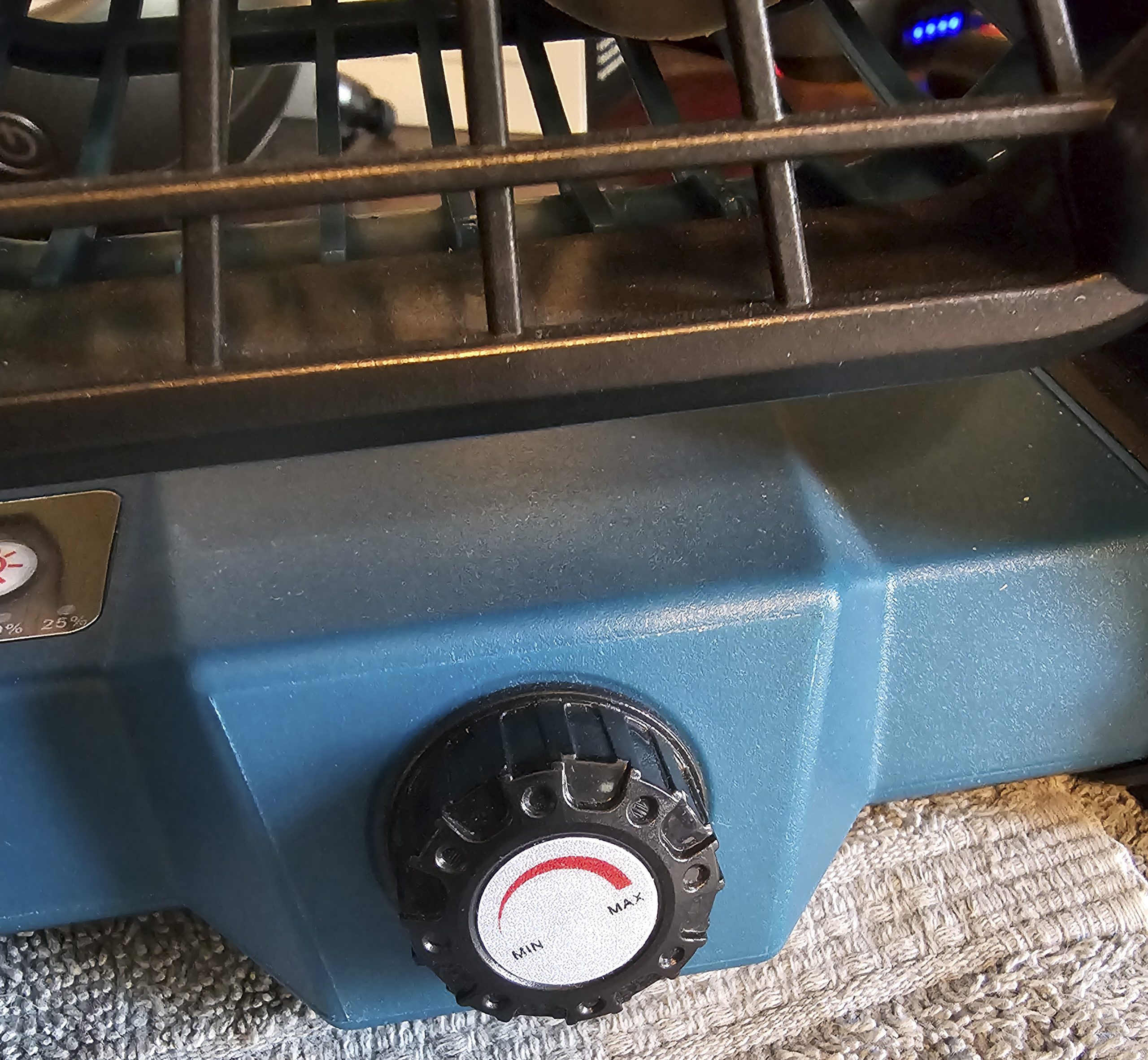
However, at 8:56 pm, as Noah was preparing to return to the Second Floor, he discovered that one of his battery-operated fans was running inside his equipment bag. The fan had not been operating approximately 40 minutes earlier when the team completed its work on that level. Noah noted that earlier in the evening he had found one of his other fans had been turned on inside his bag, but presumed it had happened accidentally when the bag had been brought into the building. The second fan that had been turned on was a different type of ‘on’ switch that physically requires turning a knob to turn the fan on (versus just a push button). In addition, the knob that controls the fan is located inside the base of the fan, which helps shield the knob from accidentally being twisted.
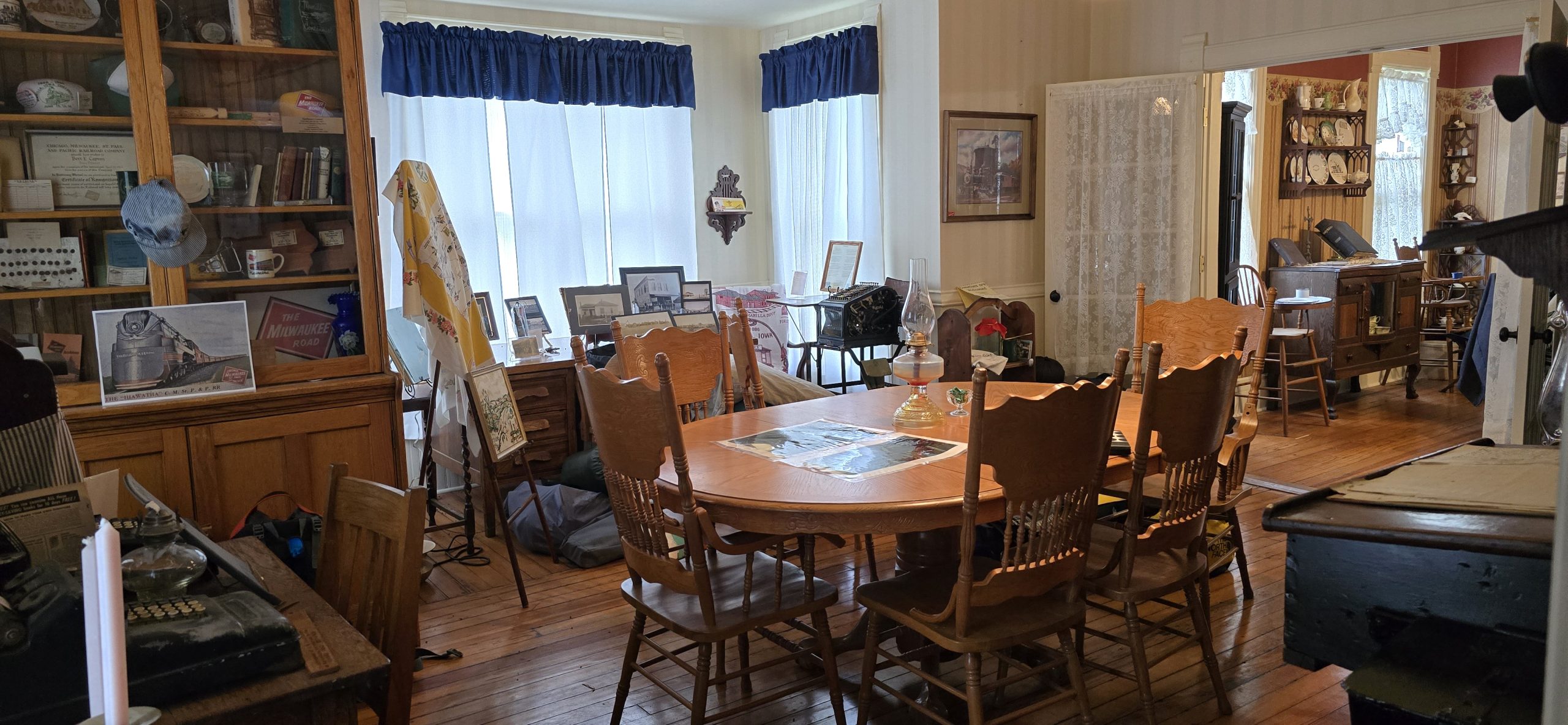
Noah decided to move the fan that was most recently found to be on to the Rocking Chair Room so that it would be in front of a camera if the fan were to come on again.
The team decided to end the investigation on the Second Floor at that time and take a break.
Break: 9:22 pm to 9:55 pm
After the break, the team decided to head back to the Basement to continue the investigation.
10:00 pm – Basement
The team returned to the Basement and spread out among its primary investigation areas. Noah was stationed in the Coaches Room, Tony on the east end of the Train Side, Tom on the west end of the Train Side, Gravy on the east end of the Crib Side, and Marilsa on the west end of the Crib Side.
Shortly after the team settled into their positions, an EVP session was started at 10:03 pm.
At 10:10 pm, Noah heard what sounded like a pebble skipping across the cement Basement floor. Noah thought it sounded like it had landed in front of him. The team immediately stopped the EVP session and Tom came over and searched the area for a stone or anything else that could have caused the noise. The team discovered a small plastic jewel on the floor. It was the only object found that could reasonably have produced the sound heard by the group. However, no visible source for the jewel could be identified, and it did not appear to belong to any of the surrounding antiques. The team spent approximately 20 minutes attempting to recreate the event with anything they could find in the area but nothing replicated the noise heard except for the plastic jewel.
After this event the team restarted the EVP session at 10:30 pm and attempted to see if there was something there that had thrown the plastic jewel, or if something else might be tossed. However, no other events occurred during this session and the team decided to head to the First Floor.
10:43 pm – First Floor
Noah was positioned on the south side of the Dining Room, Gravy at the base of the main staircase, Tony in the Records Room, Marilsa in the Rocking Chair Room, and Tom on the north side of the Dining Room.
No significant activity was documented during this session and team decided to head to the Second Floor.
11:08 pm – Second Floor
Team members were positioned as follows: Tom near Room #1, Marilsa near Room #2, Tony near Room #6, Noah near Room #12, and Gravy near Room #8.
The team began another EVP session and at 11:12 pm, a growling-type sound was heard. No source could be identified; however, the sound may have been related to water moving through the building’s plumbing system.
No other events occurred during this session and the team decided to take a quick break.
Break: 11:30 pm to 11:50 pm
After the break the team continued the investigation on the First Floor.
11:55 pm – First Floor
For the final structured session of the night, team members occupied different seating positions than in previous sessions while remaining in the same general areas of the First Floor. Because the team was already familiar with the environmental sounds of the location, no control silence period was conducted.
An EVP session began immediately at 11:55 pm.
At 11:58 pm, the REM feature of the Mel-8704REM/SDD activated. This feature emits a very localized EMF field around an antenna, that if manipulated, will emit a light and sound alarm. Other EMF fields are known to great false positives with this sort of device such as that a WiFi signal or someone driving by using a CB radio could cause the device to go off. A lot of effort was used to try and get the REM to alarm again but it did not, and PIM believes this was a false positive result.
At 12:00 am, Tony reported experiencing a sensation like a spider web brushing across his left ear while seated in the Rocking Chair Room. Nothing was captured on the camera located in that room to verify the sensation.
Nothing else occurred during this session and the team decided to head back to the Basement.
From 12:36 am to 1:15 am, the team conducted a final investigation sweep of all three floors of the hotel, starting with the Basement and working their way up. Team members rotated positions and asked a variety of questions that differed from those used earlier in the evening.
During this final period, the location was notably quiet, and no significant activity or anomalous events were observed or documented. The team then decided to end the investigation at 1:15 am.
The team packed up their equipment and settled down to sleep in the location. No events were noted while the team slept.
Evidence
Evidence Review: Jewel Toss Sound, First-Floor Noises, Growling Sound, and Fans Activating
Many of the noises heard throughout the investigation, including voices and thumping sounds, can likely be attributed to environmental factors. Although the location is situated in a small town and is generally quiet, there are still nearby sources of noise. A gas station located close to the hotel could account for some of the door-slamming sounds that were heard, and occasional groups of people walking through the neighborhood may have contributed to the voices documented earlier in the evening.
During one of the breaks, Tony and Noah walked out to the street and observed that vehicles passing the hotel would occasionally drive over a nearby manhole cover, creating a surprisingly loud impact noise. Sounds of this nature could easily become distorted within the building, particularly in the Basement, making it difficult to determine their true source.
That said, the team does not have an explanation for the battery-operated fans that were discovered running inside Noah’s equipment bag. This occurred on two separate occasions involving two different fans, and no investigators were near the bag when the activations occurred. Unfortunately, no monitoring equipment had been placed in that area because there had been no previous reports or claims associated with that location.
The sound associated with the “jewel toss” was not captured on video; however, it was recorded on multiple audio devices. While the team cannot state with certainty what caused the noise, a small plastic jewel was discovered on the floor immediately afterward and was the only object found that matched the sound heard by investigators. No surrounding antiques or basement artifacts appeared to contain similar pieces, and the jewel seemed noticeably out of place within the environment.
Stationary Recorder – 10:10 pm
Shortly before the jewel-related incident, Noah asked whether anyone could mimic a whistle he had made. A few seconds later, a whistling response was captured on Tony’s Zoom H1 control recorder. The sound closely resembled Noah’s whistle but was not heard by any investigators in real time and was only identified during audio review.
Tony’s Control Recorder – 10:00 pm
The growling sound documented on the Second Floor, along with several other unusual noises recorded throughout the night, could not be conclusively explained. However, in many cases, the sounds were either not captured on equipment or were ultimately attributed to environmental or external sources. As a result, no definitive evidence was obtained linking these sounds to paranormal activity.
Conclusion
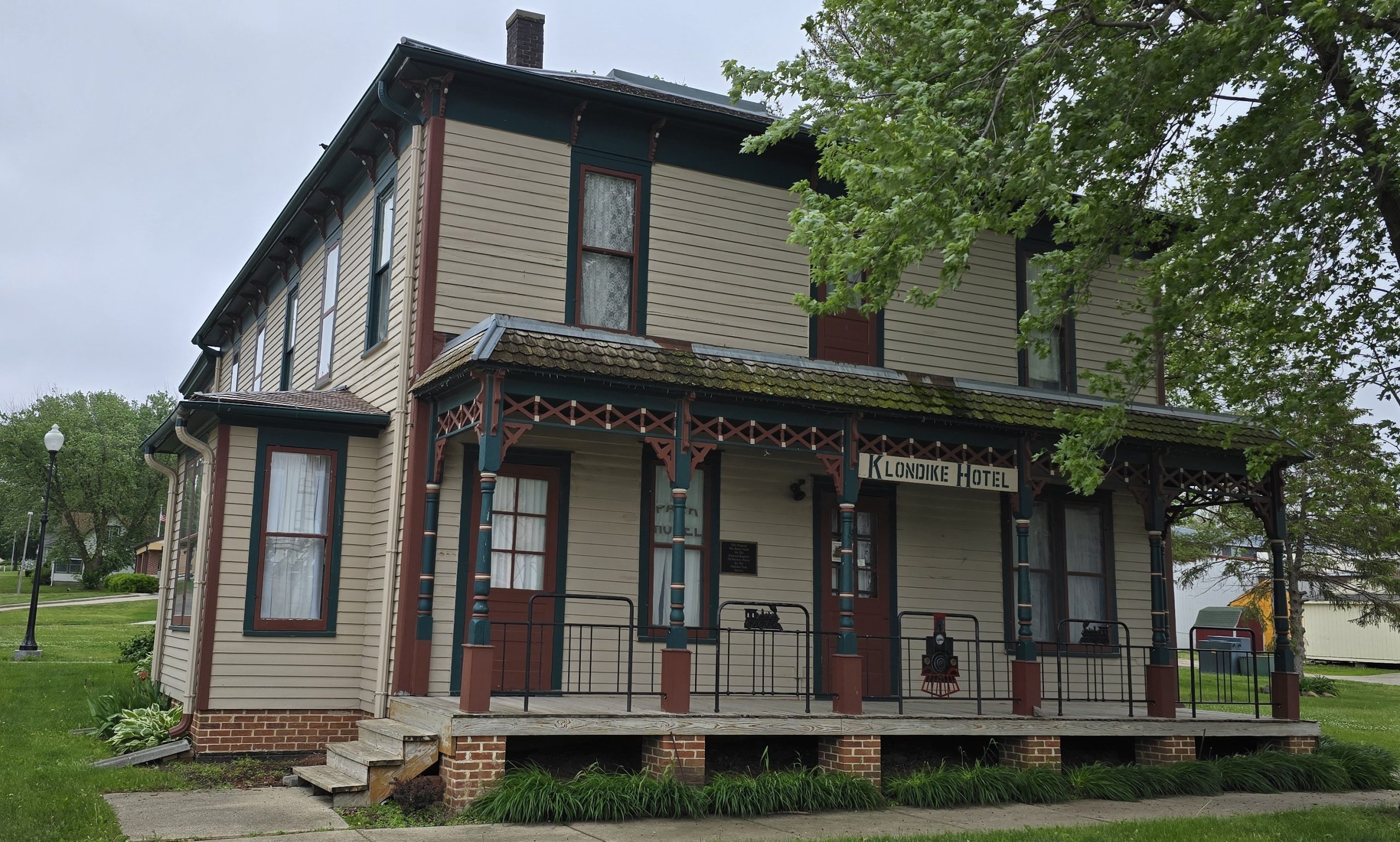
The historic Klondike Hotel proved to be a fascinating and well-preserved location. Rich in history and meticulously maintained, the property offered a unique atmosphere that set it apart from many of the locations the team has investigated over the years.
Prior to the expedition, the Klondike was not considered one of the primary destinations and was viewed more as a stop between the two main attractions on the itinerary. However, as the investigation unfolded, it quickly became one of the most memorable locations of the trip. The team documented several unusual incidents for which no definitive explanations could be found, making the experience both intriguing and rewarding.
While many of the sounds and events recorded throughout the night could be attributed to environmental factors, a few occurrences remain unexplained. The activation of battery-operated fans inside a closed equipment bag, the “jewel toss” incident, and other anomalous experiences could not be conclusively accounted for through normal investigation methods.
Were these events paranormal in nature? The team cannot say with certainty. As investigators, our goal is not to prove or disprove the existence of the paranormal, but rather to document experiences and evaluate possible explanations. In several cases at the Klondike Hotel, we were unable to determine how or why certain events occurred.
Regardless of their origin, the incidents documented during this investigation left a lasting impression on the team. The Klondike Hotel has earned a place among our favorite investigation sites, and it is a location we look forward to revisiting in the future.
References
- City of Manilla. “Klondike Hotel History.” City of Manilla. Accessed September 18, 2026. https://www.manillaia.com/history.asp?key=4
- Haunt Bound. “Historic Klondike Hotel (Manilla).” Haunt Bound. 2026. https://hauntbound.com/locations/ia/klondike-hotel-manilla/